Showing posts with label Subbarao. Show all posts

Wednesday, September 4, 2013

Six things D. Subbarao wants to do after retirement

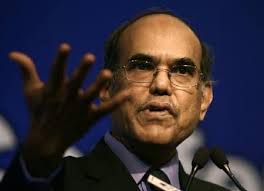
A file photo of D. Subbarao. Photo: Bloomberg

Llive Mint:Tamal BandyopadhyayWed, Sep 04 2013. 04 26 PM IST

What does Subbarao, who steps down as RBI’s 22nd governor on Wednesday, want to do after retirement?


There are six things on his wish list:
• Studying mathematics and linguistics
• Learning the Salsa dance
• Travelling
• Re-reading some of the books he has already read like Catch-22by Joseph Heller and Zen and the Art of Motorcycle Maintenance: An Inquiry into Values by Robert M. Pirsig.
Subbarao also plans to open a tutorial class in which he will give special lectures on how to take baby-steps; how to switch from being a dove and a hawk; and how to flip-flop.
Finally, he will renew his relationship with his 94-year-old mother-in-law, who stopped talking to him after inflation started inching up. She has not spoken to him for the past three years.
There are quite a few things he will miss after demitting office.
They are the feeling of being important; being mollycoddled at every function; big luncheons; and being well taken care of during air travel.
What will he enjoy after his five-year stint at the corner room of the Reserve Bank of India (RBI) headquarters on Mint Road in Mumbai?
First, his personal autonomy.
He will not have to try and talk profoundly every time he meets somebody.
Finally, he can go to see a matine show of Chennai Express.
His advice to his successor Raghuram Rajan?
Well, he has only one piece of advice: Take every important decision personally and depend on the RBI staff for seemingly unimportant or trivial issues. The important decisions include deciding on the menu for lunches thrown in honour of dignitaries, what gifts should be given to such dignitaries and the sitting arrangements at such functions.
The staff should be consulted while making monetary policy.
Banker’s Trust Realtime is a frequent blog by Tamal Bandyopadhyay, who writes a popular weekly column Banker’s Trust.

Outgoing RBI Governor D. Subbarao: The man who dared to disagree


Outgoing RBI Govenor D Subbarao


Anand Adhikari       Last Updated: September 4, 2013  | 11:27 IST


"The Chinese have a saying, may you live in interesting times," Duvvuri Subbarao had said in June 2009, when he was hardly nine months into his new job as the Reserve Bank of India's (RBI) 22nd Governor. Set to complete his five year term and retire on September 4, he recalled his comment recently at a financial management summit organised by a leading economic daily in Mumbai. "I can hardly complain," he said, amid loud laughter from the audience of pin striped bankers listening keenly to him. "These have been interesting times for me, perhaps a bit too interesting."
 
Barely a fortnight after Subbarao took over in September 2008, US based investment banker Lehman Brothers went belly up triggering a global economic downturn. Subbarao, a 1972 IAS officer from the Andhra Pradesh cadre, had to cope with its fallout in India. He was no novice though. He may have studied Physics at the prestigious Indian Institute of Technology, Kanpur, but since then had worked extensively in the finance ministry as well as the World Bank for two decades before joining the RBI.  Subbarao was handpicked for the position of RBI governor by none other than current Finance Minister P. Chidambaram himself, during his earlier stint in the same position in 2004-2008.

Many may have thought Subbarao would behave like a finance ministry lackey in the central bank. He proved them completely wrong. Far away from New Delhi, at the RBI headquarters on Shahid Bhagat Singh Road, Mumbai, Subbarao knew he had his work cut out for him - ensure financial stability, keep inflation under check and support growth in the economy. One more thing bothered him, as he informed Business Today shortly after taking over - the lack of fresh air in his 18th floor corner room. The last he could do little about. 

Subbarao knew well he was occupying a chair luminaries before him had done - among them, M. Narasimham, I.G. Patel, C,D. Deshmukh, current prime minister Manmohan Singh, R.N. Malhotra, C. Rangarajan, Bimal Jalan and Y.V. Reddy. Reddy, his immediate predecessor, who was in charge at a time of nine per cent plus GDP growth, won belated respect - after the downturn struck - for having kept tight regulatory control during the gung-ho period, which left the economy better equipped to face the crisis. Before him Jalan too had effectively shielded the Indian economy from the Asian financial crisis of 1997/98.

The 2008 crisis - which has even been compared to the great depression of 1929 - started as a sub-prime crisis in the US mortgage market, but then gradually spread to Europe and other markets, India among them. At first, many dismissed the slowdown murmurs, noting that the Indian economy was still buoyant, but not Subbarao. His immediate concern was to ensure financial stability. 

Indeed, the banking system seemed more vulnerable than the economy. ICICI Bank, the biggest private sector bank, for instance, was in the news for all the wrong reasons - possible exposure in the sub-prime market and mark to market losses in other banks.  

The post crisis period exposed the chinks in central banks across the world. They had been behind the curve when it came to gauging the implications of innovative or exotic financial products in the market. It was said that Indian banking remained unscathed because Subbarao's predecessor Reddy had implemented the right policies. But Subbarao was not entirely certain. He felt the Indian banking model, especially that of banks with dozens of subsidiaries in capital intensive life insurance or capital market related businesses, was dangerous to financial stability. What if one of them failed? He was not at all comfortable with the universal banking model. "It may work in some countries and situations, but not in others," he said.

His next big challenge arose when he had to nudge Indian banks, which were struggling to implement the Basel-II framework, towards gearing themselves up for the still more stringent Basel III regulations. And this required higher capital provisions for financial risks.

Following the global recession, Subbarao realised quickly that the Indian economy was not immune. Manufacturing growth was slowing down, inflation was in the double digits and stock markets were falling. Many Indian corporations which had made billion dollar acquisitions abroad were over-leveraged. The domestic currency was witnessing a flight of capital, especially by foreign institutional investors (FIIs).  The rupee, after appreciating to 39 to the US dollar in 2007/08 had started to fall, hitting the 45-46 range in 2009. There was a danger of growth slowing down.  

To stimulate growth, Subbarao, in his first seven months as RBI chief, reduced the repo rate (the rate at which the RBI lends to banks and which in turn determines lending rates) from nine per cent in September 2008 to five per cent in March 2009. By then, it was clear that the Indian economy would be settling at a much lower 6.7 per cent GDP growth rate in 2008/09 against 9.1 per cent in 2007/08.  Was he wrong in reducing interest rates when inflation was inching up? Some bankers feel he was. 

Subbarao's first big mistake, according to them, was reducing interest rates in 2008/09. The wholesale price index (WPI) recorded an average increase of 8.2 per cent that year, much higher than 4.7 per cent in 2007/08.  

While India was slowing down, global central bankers and governments were taking measures to avoid a recession. Soon a danger arose, which initially went unnoticed. The US Fed started to buy bonds by pumping money into the US financial system. Quantitative easing (QE), as this was called, reached about $ 85 billion per month. A part of this new found liquidity flowed into the equity and bond markets of emerging economies like India. Traces of QE money were visible in the country's stock market, where FIIs, which had been withdrawing, began pumping in money instead.

For example, FIIs investment in Indian equities in the first six months of 2009/10 was  $14 billion, as against an outflow of a little over $5 billion in the same period the previous year. Dollar inflows into the country also boosted the Indian rupee value against the US dollar. The rupee's slide was halted and it remained in the 45 to 48 a dollar range through 2009/10. There was no threat to growth as advanced estimates showed growth of over eight per cent. Subbarao kept interest rates benign -- the repo rate was 4.75 per cent for the most part of 2009/10. 

Subbarao also took a path-breaking step in November 2009 when he decided to buy 200 tonnes of gold from the International Monetary Fund for $6.7 billion. He wanted to diversify the country's foreign exchange assets. Though the gold component of forex reserves is minuscule (less than five per cent) this move was appreciated by the market. GDP growth for 2008/09 was 8.6 per cent. 

But then, around September 2010, inflation started growing. Inflationary pressure was the result of low interest rates, global money and supply side issues in India which got compounded because of a poor monsoon. By the end of 2009, the challenge for Subbarao was to tame inflation. So he now began to raise interest rates, just the opposite of what he had been doing earlier. At a seminar in October 2009, Subbarao explicitly stated that India's policy rates would have to be tightened, ahead of those in advanced economies. "The resultant larger interest differential (domestic and global) may attract larger capital inflows," he said. 

In March 2010, Subbarao for the first time hiked the repo rate by 25 basis points to five per cent. Just two months before that, in January, Pranab Mukherjee took over as the finance minister. Growth prospects remained bullish in 2010/11 because of global liquidity and low interest rates. 

Subbarao's 2009/10 patch remains controversial. He was accused of not building up foreign exchange reserves when the rupee kept appreciating due to the dollar inflows following the QE, by, among others, Arvind Panagariya, Professor of Economics, Columbia University. Panagariya even called Subbarao's tenure one of the worst performances by an RBI governor. 

But Subbarao has addressed the criticism. At a May 2010 global meet, he said it was important to distinguish between countries whose reserves were a consequence of current account surpluses (like China) and others with current account deficits (like India) whose reserves were purely a result of capital inflows. "Our reserves comprise essentially borrowed resources, and we are therefore more vulnerable," he said. In addition, the decision to buy dollars to accumulate reserves would have required the permission of his political masters. 

To stem inflation, between April 2010 to March 2011 , Subbarao  hiked the repo rate from 4.75 per cent to 6.75 per cent. This was when his differences with the finance ministry began to surface. The governor was correct in targeting inflation as average inflation (or the WPI) was 9.6 per cent in 2010/11. But the country saw a GDP growth of 9.3 per cent that year - the highest since 2008/09.

While the growth story looked intact, rising inflation and interest rates were a big concern. There was no dearth of advice for Subbarao - from ex-RBI governor C Rangarajan and now Chairman of the Prime Minister's advisory council, to Montek Singh Alhuwalia, Deputy Chairman of the Planning Commission to Kaushik Basu, now Chief Economist at the World Bank, all chipped in. 

Even though inflation in 2011/12 moderated at 8.9 per cent, Subbarao kept raising the  repo rate from 6.75 per cent in March 2011 to 8.50 per cent in March 2012. Some in the banking industry say that this was unwarranted. 

Prime Minister Manmohan Singh supported Subbarao strongly for the first three years of his tenure. But things were not going well for Subbarao with the finance minister. Mukherjee unilaterally declared that new banking licences would be issued. (The RBI is the licensing authority.) Subbarao had taken the stand earlier that there was no need for more banks. 

Despite this Subbarao's tenure was extended by another two years in September 2011. This extension was announced by none other than the prime minister himself. The first year of the extended stint was dominated by still more interest rate hikes in order to tame inflation. Industry and business leaders criticised Subbarao saying growth and investment would suffer. GDP growth eventually fell to its lowest in a decade touching 6.2 per cent in 2011/12. But Subbarao maintained the needs of the so-called 'silent constituency', the poor and downtrodden, who are the most affected by inflation, had to be addressed. "Inflation is a regressive tax on the poor," he said.

He also cited historical evidence to show that in the medium term, price stability and growth were not at odds. But he admitted that growth had to be sacrificed to some extent in the short term. He maintained that low and stable inflation, in the range of four to six per cent eventually helps growth in the long term.

The year 2011/12 was also the one when the current account deficit began growing alarmingly because of the rising trade deficit. It jumped from 2.7 per cent in 2010/11 to 4.2 per cent.  Subbarao finally changed tack and began reducing the repo rate from April 2012, with an initial cut from 8.50 per cent to eight per cent. He further reduced it to 7.25 per cent in subsequent months. 

But critics continued to carp that the pace of reduction was very slow. Subbarao responded by pointing out that he had to be cautious since the government had not provided any credible roadmap towards fiscal consolidation. P Chidambaram, who returned to the finance ministry after Mukherjee was elevated to president, did come out with one in October 2012 , but Subbarao's stance did not change. Frustrated, Chidambaram famously remarked, "If the government has to walk the path of growth  alone, it is prepared to do so."

Subbarao continued to insist that the country had to sacrifice some short term growth to contain inflation. GDP growth plunged still lower, to five per cent in 2012/13. 

The last six months have been very stressful for Subbarao as the rupee went crashing down from 55 to the US dollar to 68. In a debate in the Rajya Sabha  on the state of the economy last month , Chidambaram again noted that the RBI needed to focus on growth and employment. At the launch of a book on the RBI, Prime Minister Manmohan Singh too called for fresh thinking on monetary policy in a globalised environment.   

In his last speech as RBI governor, delivering the Nani Palkhivala memorial lecture in Mumbai, Subbarao hit back at his critics. He squarely blamed the government for the rupee's fall, defended his decision to raise rates to contain inflation, and hoped that Chidambaram, who made him RBI governor, would one day realise the worth of the actions he took in that position.  

Subbarao, 64, departs at a time when growth projections for 2013/14 have fallen below five per cent. In the first quarter (April-June), GDP growth was already 4.4 per cent. India is undoubtedly passing through one of its worst phases. No doubt the government is responsible for its tardy approach to reforms, but Subbarao has to share the blame.  

How will the history judge Subbarao? 

As a governor who fought fiercely for the central bank's independence, one who had a mind of his own and honestly did what he  thought was right for the economy? 

Or will the verdict be less favourable?    

Monday, September 2, 2013

Subbarao’s 5-year stint at RBI ends this week

Reuters
Dr Subbarao’s critics say his policies resulted in the moderation of economic growth to decade’s low of 5 per cent in the last fiscal.
Reuters


FP:SEP2,2013

Career bureaucrat-turned-banker D Subbarao demits office on Wednesday after a 5-year stint as Reserve Bank Governor
His tenure coincided with a tumultuous period of global financial stress that has left the Indian rupee at a record low, faltering economic growth and high inflation.
While there were brickbats for his tight monetary policy that his critics called hawkish, there were also many admirers, who considered his stance independent of the government and displaying the central bank’s autonomy.
Within days of moving to Mint Street in Mumbai in September 2008 from the North Block where he was Finance Secretary, Dr Subbarao was faced with a crisis situation. The financial meltdown of 2008 was perhaps the worst since the ‘Great Depression’ of 1930s.
India came out largely unscathed from it mainly because of the sound fundamentals of the banking system and strict supervision by the RBI. But what Dr Subbarao will most be remembered for will be the tough monetary stand that he took during the last one and half years when inflation was rising on one hand and economic growth stumbling on the other.
Under his leadership, the RBI raised policy rates 13 times between March, 2010 and October, 2011, testing the government’s patience. RBI’s tough stance brought down wholesale inflation from double digits in 2010-11 to around 5 per cent now and core inflation declined to around 2 per cent.
Subbarao’s unrelenting focus earned the ire of those in the government with Finance Minister P Chidambaram even remarking once that if the government has to walk the path of growth alone, it was prepared to do so.
Observers perceived the differences between the government and the RBI as not a healthy sign especially when the economy was under strain.
The soft-spoken and affable RBI Governor vented his feelings towards the end when he said the problem lay more with the government and domestic factors than with problems outside.
Favouring greater accountability for RBI, Dr Subbarao said an arrangement should be worked out for the governor to make two presentations a year before Parliament Standing Committee on Finance on the bank’s policies and outcomes and answer questions from the members of the Committee.
Dr Subbarao’s critics say his policies resulted in the moderation of economic growth to decade’s low of 5 per cent in the last fiscal.
Defending his policy actions, the 22nd RBI Governor said on many occasions that growth moderated, but to attribute all of it to tight monetary policy would be inaccurate, unfair, and importantly, misleading as a policy lesson.
“India’s economic activity slowed owing to a host of supply side constraints and governance issues, clearly beyond the purview of the RBI,” Dr Subbarao has maintained.
He always defended his policy saying that inflation is a “regressive tax” and his focus was on containing prices in the interest of the vast numbers of poor.
As wholesale inflation started inching downward this summer, the governor, a topper in the Civil Service exam in 1972, was faced with problem of falling rupee. The rupee has depreciated over 20 per cent against the dollar in the last three months.
The rupee’s slide continued even as Dr Subbarao took several measures in consultation with the government to contain the free fall. The slide in the rupee was triggered by the statement of Fed Chairman Ben Bernanke on May 22 that US may go in for quantitative easing later this year.
“Admittedly, the speed and timing of the rupee depreciation have been due to the markets factoring in ‘tapering’ by the US Fed, but we will go astray both in the diagnosis and remedy, if we do not acknowledge that the root cause of the problem is domestic structural factors,” Dr Subbarao said in his last public lecture as Governor.
At the same time, growth in the first quarter of the current fiscal also plummeted to 4.4 per cent due to drop in mining and manufacturing output.
Growth was at the slowest pace since the 2008 financial crisis, with all but one of the eight sectors registering a lower rate of expansion or contraction. These are problems his successor Raghuram G Rajan, chief economic advisor to finance ministry and former economist of International Monetary Fund, has to tackle.
Dr Subbarao summed up his innings succinctly in his last speech. “May you live in interesting times. I can hardly complain on that count. I had come into the Reserve Bank five years ago as the ‘Great Recession’ was setting in, and I am finishing now as the ‘Great Exit’ is taking shape, with not a week of respite from the crisis over the five years.”
PTI

Monday, August 19, 2013

Subbarao cautions on ‘too-big-to-fail’ banks


The Reserve Bank of India wants at least five banks of comparable size to ensure that consolidated entities do not acquire monopolistic market power, adopt predatory behaviour or force smaller banks into unviable models.

Speaking at a banking conclave organised by the Federation of Indian Chambers of Commerce and Industry and the Indian Banks’ Association, RBI Governor D. Subbarao said the size of banks in the country is significantly skewed. The second largest bank in the system is almost one-third the size of the biggest. This creates a monopolistic situation.

Significant big banks can resort to monopolistic practices that can blunt the monetary transmission and market mechanism for efficient allocation of resources. Citing the 2008 credit crisis, which was triggered by too-big-to-fail banks, Subbarao said, “We don’t need monopolies… as large banks can become too-big-to-fail, leading to moral hazard problems.” He also said consolidation could pose problems of technology migration, customer attrition, cost of implementation, besides raise HR issues of seniority, salary, transfer, promotion, parity in perks and litigation. Large banks will not be able to provide the personalised services small banks offer.

Further, Subbarao added that consolidation expands the capital base, facilitating increased lending activity and faster GDP growth, apart from boosting infrastructure financing, meeting demands of corporates, bringing in cost efficiencies and focused supervision. But it also raises regulatory issues.

Saying it will take several years for the country’s banks to achieve the status of a large global bank, Subbarao said, “Our biggest bank (SBI) is ranked about 60th in the global league. “It may take years for our banks to become global players by way of organic growth. 

However, we should aspire to have a few Indian multinational banks by selective acquisition.” In May, the Finance Minister had called for consolidation in the banking sector to create a few global-size banks.

Thursday, April 18, 2013

Quantitative capital controls can be distorting, inequitable: D Subbarao


D Subbarao.jpg


REUTERS: MUMBAI, APR 18 2013, 11:24 IST

Quantitative capital controls have been more effective for India in the short term but such limits can also be distorting, inefficient and inequitable, said central bank Governor Duvvuri Subbarao.

India has set a cap of $25 billion for foreign investment in government bonds and around $51 billion in corporate bonds.

Subbarao, in his remarks at the IMF conference in Washington DC on Wednesday, said the real risk of intervening in the forex market to protect a depreciating currency was depletion of forex reserves and still not being able to push up the exchange rate.

His remarks were posted on the Reserve Bank of India's website on Thursday.

"It should also be clear that a failed defence of the exchange rate is worse than no defence. So, when you are intervening in the forex market, it is important to make sure that your intervention is successful," Subbarao said.

The RBI had been intervening in the forex market in the last two years to protect a sharp fall in the Indian currency. The Indian rupee hit a life-time low of 57.32 to the dollar in late June 2012 and has recovered nearly 6 percent since then.

Monday, December 10, 2012

Memo to RBI: Only shock therapy will work from now on


by R Jagannathan: firstpost : Dec 10, 2012


When Reserve Bank Governor D Subbarao takes a view on interest rates next week in his mid-quarter monetary policy review, he should know that no matter what he does, growth will not revive and inflation will not come down.

Unless he decides to go in for shock therapy, which he has been loath to do so far. If anything, he has been willing to wound, but afraid to strike.

And by shock therapy we mean he should either cut rates significantly, or do the opposite – say, by, one or two percentage points immediately. This would be shock therapy, not a 25 basis points cut or status quo on repo rates. That would be neither here nor there.

The problem is that Subbarao has not been running a

 tight enough policy
. AFP

For a frog sitting in water, if the heat is raised a little bit at a time, it is likely to get comfortable with the slowly rising heat till it reaches the level where it cannot survive.

 It would have been far better to give the frog a sudden jolt of scalding heat so that it would have jumped out when it could have saved itself.

India’s wounded economy is suffering from a debilitating inertia that is neither too hot to jump off, nor hot enough to kill. 

But the end result is surely going to be a dying growth cycle— as the 5.3 percent GDP growth in the second quarter of 2012-13 testifies.

Subbarao’s critics, who want interest rates brought down to reverse the slowdown, point out—not unfairly—that his tight money policy is not really working since there is no appreciable decrease in underlying inflation.

The Governor’s backers—who include most global research agencies and right-wing economists—say the problem is that Subbarao has not been running a tight enough policy, and inflationary expectations are still nowhere near topping out. So he should not be sending a cheap money signal.

India’s top moneyman has been equivocating between whether he should target growth or inflation over the last few quarters, but on balance he has managed to do little about either because monetary policy is ineffective when fiscal policy is pulling in the other direction.

So what’s going wrong?
 Why hasn’t the good doctor’s medicine—holding the line on interest rates—cured inflation? 
And what does this tell us about what he should do next?

The most important element in cure is diagnosis. If your diagnosis is right, the cure will be obvious. If it’s wrong, no cure is possible.

So the focus has to be on diagnosing right. A Seshan, writing in Business Standard today, offers an interesting insight on the diagnosis and says the problem is “inertial inflation” — a situation where inflation has stabilised at an uncomfortable level and refuses to be tamed. Others have called the phenomenon by a different name—structural inflation—but it’s probably the same thing

And why has this happened in India? 
Seshan sees inflation as sticky because several expectations are built into the economy. He writes: “Inter alia, the factors that contribute to it (inertial inflation) are the annual increase in support prices for agricultural produce that provide the benchmarks for the markets, the periodical wage revisions in the organised sector and RBI’s assumption of an ‘acceptable’ inflation rate of four to five percent —which people know by experience will be exceeded. The central bank can deal with only the last factor in relation to expectations.”

Jahangir Aziz of JP Morgan Chase, writing The Indian Express, explains the other side of the inertia by pointing out that despite high rates, “India has not even enjoyed the ‘benefit’ of lower inflation from falling growth. Instead, inflation has remained stubbornly high. The authorities and many in the market have raised this as a puzzle. But there isn’t one. India’s growth has fallen from 9 percent to 5 percent not because of slowing consumption but because corporate investment has declined sharply.”

Between Seshan and Aziz we have the real issue: the system is too geared for higher inflation, and the confidence to invest—which holds the key to supply side nirvana—is missing. Thus, we have a situation where lack of investment and growth is making fighting inflation even harder.

The way out of this “inertial inflation”, or “inertial slowdown” is that we need a systemic shock, and Seshan’s own suggestion is that the government should release its massive food stocks to the poor and lower the general level of inflation. Though this would not bring down the fiscal deficit (another important reason for “inertial inflation”), small-scale tinkering with the deficit is not achieving anything anyway. A plus point with this proposal is that politicians would be thrilled to give away grains at throwaway prices in an election year.

Aziz’s shock therapy would include important second generation reforms like the introduction of a goods and services tax (GST). In addition, “I would place a permanent fiscal responsibility act that commits the government to hard budget constraints, a framework to price natural resources transparently, a land acquisition framework that balances the interests of sellers and buyers and a transparent set of election finance rules very high on that agenda.”

A government married to two political rivals in Uttar Pradesh—Mayawati and Mulayam Singh—may not find the gumption to act boldly, but that still leaves RBI Governor Subbarao free to act.

What can Subbarao do in his 18 December monetary policy?

 What shock can he deliver?

Two possible shocks are possible. Since everyone is expecting a 25 basis points cut in repo rates, it is impossible to shock anyone with this. Since no one would be surprised if he held rates, this too would not come as a shock.

A true shock would have to be something higher on the Richter scale: if Subbarao thinks growth needs a kickstart, he should cut rates sharply—by one or two percent at one go. If he thinks inflation is the problem, he should raise rates by the same amount. The latter may worsen growth, but it could prod the government—our frog —to jump out and try out some second generation reforms.

The India Growth story is dying.
 It will survive only if there is a shock to the system. 
Over to you, Dr Subbarao.

Friday, April 29, 2011

PAC setback for RBI governor Subbarao

RBI Governor, Dr. D Subbarao.
Source :TNN:April 29:2011:4.05am IST


Questions over Duvurri Subbarao's role in the 2G spectrum scam could be a setback to the former IAS officer's chances of getting a second term in the Reserve Bank of India in September.

In fact, the names of economic affairs secretary R Gopalan and chief economic advisor Kaushik Basu have already started doing the rounds as a possible successor. 


Both joined the finance ministry afterPranab Mukherjee moved into North Block in late 2008.

Apart from having been in charge of the financial sector department in the ministry, Gopalan was a public sector bank employee before joining the IAS. Basu is an economist who is on leave from Cornell University.

When Subbarao moved to Mumbai in September 2008, he was given a three-year term and he was widely expected to get a two-year extension. 


Yaga Venugopal Reddy, Subbarao's predecessor on Mint Road, had served a five-year term while Bimal Jalan's three-year term had been extended though he decided to resign midway to become a Rajya Sabha member.

The draft PAC report, which was not accepted by all the committee members, had said Subbarao should be asked to explain why he did not raise questions over telecom ministry's move to ignore finance ministry's recommendations.

Officials said there was no formal proposal to either extend the present governor's tenure or find a replacement. A final call would be taken by Prime Minister Manmohan Singh and finance minister Pranab Mukherjee closer to the expiry of Subbarao's term.

In 2008, in a first, a committee headed by P Chidambaram, then finance minister, with C Rangarajan, chairman of the Prime Minister's economic advisory council, as a member shortlisted possible candidates and zeroed in on Subbarao.

Though Subbarao is seen to have handled the impact of the global financial crisis well, he has publicly opposed the government on at least two issues. The first area of difference was the establishment of a joint committee of regulators for dispute resolution that is headed by the finance minister. Similarly, he was severely critical of the government's decision to set up the Financial Stability & Development Council, which is again headed by the finance minister.

On both occasions, however, he was placated by the government after signals from the North Block that RBI governor is the first among equals when it comes to financial sector regulation.

After Chidambaram's departure from the finance ministry, the government has stayed away from reappointments in regulatory agencies with former Sebi chairman C B Bhave and former RBI deputy governor Usha Thorat being examples. At least two senior finance ministry officials - revenue secretary P V Bhide and finance secretary Ashok Chawla - were not given extensions and were allowed to retire just a month before the budget was presented.

In case of banks and financial institutions, too, the government has decided that any reappointment will take place only after the incumbent's performance is reviewed by a specially-appointed panel.