 Nokia made the first mobile phone in 1987
F P :Vivek Kaul Sep 4, 2013Cockroaches are great survivors. They can even survive a nuclear attack. As Dylan Grice, formerly with Soceite Generale and now the editor of the Edelweiss Journal wrote in a report titled Cockroaches for the long run! in November 2012 “Cockroaches may not be able to build nuclear bombs, but they can withstand the nuclear war. They survive.”
Nokia made the first mobile phone in 1987
F P :Vivek Kaul Sep 4, 2013Cockroaches are great survivors. They can even survive a nuclear attack. As Dylan Grice, formerly with Soceite Generale and now the editor of the Edelweiss Journal wrote in a report titled Cockroaches for the long run! in November 2012 “Cockroaches may not be able to build nuclear bombs, but they can withstand the nuclear war. They survive.”
Grice also points out that the oldest cockroach fossil is nearly 350 million years old. “According to the record of the rocks, cockroaches first appeared just after the second of the earth’s five mass extinctions (defined as the loss of 75 percent of all species). In other words, that means they survived, the third, the fourth and fifth mass extinctions which followed,” writes Grice.
And there is no rocket science behind the ability of cockroaches to survive. They follow a very simple algorithm. As Grice writes “According to Richard Bookstaber, that algorithm is “singularly simple and seemingly suboptimal: it moves in the opposite direction of gusts of wind that must signal an approaching predator.” And that’s it.”
Such a simple straight forward strategy, along with their ability to go without air for 45 minutes, survive submerged underwater for half an hour, withstand 15 times more radiation than humans and eat almost anything, including the glue on the back of stamps, helps cockroaches survive. Companies do not come with the same kind of flexibility. Neither are they good at avoiding trouble. And their turnover rate is pretty high.
The average life span of a company listed on the S&P 500 index of leading American companies is around 15 years. This has come down dramatically from around 67 years in the 1920s. Companies have a very high mortality rate. As an article in the Bloomberg Businessweek points out
“The average life expectancy of a multinational corporation-Fortune 500 or its equivalent-is between 40 and 50 years. This figure is based on most surveys of corporate births and deaths.” Companies are either acquired, merged, broken to pieces or simply shut down. Nokia, which till a few years back was the world’s leading mobile phone manufacturer, is now going through a phase of trying to stay relevant. It was announced yesterday that the mobile phone division of the Finnish company would be sold to Microsoft for $7.2 billion.
Nokia produced the first mobile phone in 1987, more than a quarter century back. It was the world’s largest vendor of mobile phones, until Samsung overtook it in 2012. Even now, Nokia makes nearly 15 percent of the world’s mobile phones. But it only has a 3 percent share in the lucrative smartphone market, which most mobile phone users seem to be moving towards. So what went wrong with Nokia? It failed to see the rise of a new category of mobile phones i.e. the smart phone market.
As marketing consultants Al and Laura Ries,write in War In the Boardroom, “The biggest mistake of logical management types is their failure to see the rise of a new category. They seem to believe that categories are firmly fixed and a new one seldom arises.” Companies tend to remain obsessed in selling a product they are good at selling and thus fail to see the rise of a totally new category. Nokia fell victim to this as well.
The history of business is littered with many such examples. Sony invented the walkman but allowed Apple and others to walk away with the MP3 player market. RCA ,which was big radio manufacturer, had earlier allowed Sony to walk away with the pocket radio market. Southwest Airlines created an entirely new low cost airline market which gradually spread to all other parts of the world. Incumbents like Panam, Delta, Singapore Airlines and British Airways did not spot this opportunity. The 24 hour news market was spotted by CNN and not BBC as you would have expected to given the dominance they had in the global news market.
So the question is why do incumbents who are doing particularly well fail to see the rise of a new category? The answer for this lies in what happened with Kodak, a company which was a global leader in film photography. As Mark Johnson writes in Seizing the White Space – Business Model Innovation for Growth and Renewal: “
In 1975, Kodak engineer, Steve Sasson invented the first camera, which captured low-resolution black-and-white images and transferred them to a TV. Perhaps fatally, he dubbed it “filmless photography” when he demonstrated the device for various leaders at the company.”
Sasson was told “that’s cute – but don’t tell anyone about it.” The reason for this reluctance was very simple. What Sasson had invented went against the existing business model of the company. Kodak at that point of time was the world’s largest producer of photo film. And any camera that did not use photo-film was obviously going to be detrimental to the interests of the company.
 Nokia simply woke up to the smartphone game too late: AP image
So Kodak ignored the segment. By the time it realised the importance of the segment other companies like Canon had already jumped in and become big players. Also by then brand Canon had come to be associated very strongly with the digital camera whereas Kodak continued to be associated with the old photo film. The same thing happened to Sony as well. The MP3 player was ultimately an extension of the Walkman and the discman market which the company had successfully captured. So what stopped them from capturing the MP3 player market as well? Over the years, other than being a full fledged electronics company, Sony had also morphed into a music company which had the rights to the songs of some of the biggest rock stars and pop stars.
Hence, Sony supporting MP3 technology would mean that one of the biggest music companies in the world was supporting the free copying and distribution of music because that was what the MP3 was all about. And that of course wouldn’t work. This obsession with the current way of doing business stops companies from seeing the rise of a totally new category of doing business. Closer to home, Bharti Beetel is an excellent example. The company pioneered the sale of landline phones which had buttons. But it was so busy selling these phones that it failed to see the rise of the mobile phone market. And by the time the market took off, brands like Nokia were firmly entrenched.
This happened at the same time that Beetel’s sister concern, Bharti Airtel, became the largest mobile phone company in India. Imagine the possibilities here. If Bharti Airtel during its heydays had sold a Bharti Beetel mobile phone along with every connection, they could have made a lot of money. Another excellent example of this is Xerox. “Just think of Xerox’s Palo Alto Research Center, which famously owned the technologies that helped catapult Apple (the graphical user interface, the mouse), Adobe (post script graphical technology) and 3Com (Ethernet technology) to success,” writes Johnson. But the company had an excellent product in the photo copy machine which was selling like hot cakes, and there was no need for it to concentrate on other products which would be viable some day in the future.
Nokia became a victim of this phenomenon as well where it completely ignored the rise of a new category. The company was busy selling its mobile phones and failed to see the rise of the smartphone market. Even though smartphones have been around for a while now it is only in the last couple of years that they have really taken off. Hence, as long as the basic phones of Nokia were selling well, it had no real interest in thinking about the smartphone market. By the time it woke up to the smartphone game, the likes of Galaxy (from Samsung) and iPhone (from Apple) had already captured the market.
The company has been trying to play catchup through its Lumia brand but has very little market share. As a Reuters report points out “Although Nokia also said in July it had shipped 7.4 million Lumia smart phones in the quarter, up 32 percent from Q1, it was fewer than the 8.1 million units analysts had anticipated. Nokia now boasts only around 15 percent of the handset market share, with an even smaller 3 percent share in smartphones.” Blackberry is another such company. It was busy selling phones which had an excellent email application. Meanwhile like Nokia, it failed to see the rise of the smart phone market like Nokia. It is now trying catchup but other companies have already captured the market. In the days to come, the chances of Blackberry being acquired by another company, like Nokia has been, are very high.
What the Nokia story tells us is that companies unlike cockroaches are not great survivors. As the Bloomberg Businessweek article quoted earlier points out “Even the big, solid companies, the pillars of the society we live in, seem to hold out for not much longer than an aver-age of 40 years. And that 40-year figure, short though it seems, represents the life expectancy of companies of a considerable size…
A recent study by Ellen de Rooij of the Stratix Group in Amsterdam indicates that the average life expectancy of all firms, regardless of size, measured in Japan and much of Europe, is only 12.5 years.
Nokia started operating in 1871 and was named after the Nokianvirta river.
It spent more than a 100 years manufacturing everything from boots to cables to tyres.
In 1987, the company made the first mobile phone.
In 2013, the mobile phone division was sold to Microsoft.
That’s a period of 26 years. Almost double the life expectancy of 12.5 years which prevails for companies in Europe.
As per that parameter, Nokia has survived long enough.
 Reuters BT : September 3, 2013 | 19:08 ISTPHOTO: Associated Press
Here is a look at Nokia's changing face after it agreed to sell its phone business and license for its patents for 5.44 billion euros ($7.2 billion) to Microsoft.* Named in 1871 after the Nokianvirta river where mining engineer Fredrik Idestam set up his second paper mill, Nokia spent more than a century making tyres, boots or cables before producing the first handheld mobile phone, the Mobira Cityman, in 1987.* Nicknamed the "Gorba" after former Soviet leader Mikhail Gorbachev was pictured using one, it weighed a thumping 800 grams and carried an even more daunting price tag - 24,000 Finnish marks (4,650 euros).* In 1992, Nokia sold off its non-mobile divisions and launched its first digital handheld GSM phone, the Nokia 1011.* The basic Nokia 1100, launched in 2003, was a runaway hit, shifting 250 million units, making it not just the world's best-selling mobile, but the most popular consumer electronics device of any kind.* Nokia remained the world's largest vendor of mobile phones until knocked off the top spot by Samsung in 2012, but it lost its lead in the lucrative smartphone market a year earlier, having been on the back foot since the launch of Apple's iPhone in 2007.* Nokia unveiled its first Windows Phone handsets, the Lumia 710 and 800, in October 2011 after a strategic decision by new Chief executive Stephen Elop to ditch its own ailing Symbian operating system in favour of the Microsoft equivalent.* Nokia picked up the pace of product launches in 2013, including the unveiling of its Lumia 1020 with a 41-megapixel camera . Also this year, it announced a 15-euro phone, its cheapest phone ever.* Although Nokia also said in July it had shipped 7.4 million Lumia smartphones in the quarter, up 32 per cent from Q1, it was fewer than the 8.1 million units analysts had anticipated. Nokia now boasts only around 15 per cent of the handset market share, with an even smaller 3 percent share in smartphones.Source: Reuters/Nokia

Ravi Sharma, TOI Tech | Apr 23, 2013, 08.00 AM IST
NEW DELHI: After the launch of top-end Lumia 920 and Lumia 820, Nokia is busy assembling its auxiliary troops globally. India is one of the first countries to see the arrival of Lumia 520, the cheapest Windows Phone 8-powered smartphone. The phone has a lot going for it, including a big screen, free music download and eye-catching looks. But does the Lumia 520 have what it takes to stand out in the crowded budget segment of Indian smartphone market. Let's find out. Hardware and designNokiaLunia 520 is a budget device, but it does not look so at all. It follows the design language of the flagship Lumia 920 in a smaller package and has a 4-inch screen, a feature that no phone by Sony, Samsung boasts of. Only LG OptimusL5 II, now available online for Rs 11,499, has the same screen real estate, resolution and pixel density.Coming back to Lumia 520, this phone has 800x480p screen resolution and 233ppi pixel density. The device runs on a 1GHz dual-core Qualcomm processor, coupled with 512MB RAM and comes with 8GBinbuilt storage. You can also store data on memory card (up to 64GB supported) and on the cloud (7GB free SkyDrive storage).Connectivity options in the phone include 2G, 3G, Wi-Fi, Bluetooth 3.0 and microUSB 2.0. For imaging, Nokia has provided a 5MP rear snapper, but let go of the front unit. Below the screen is the regular three key layout (back, home and search) of WP
mobile operating system.At 124gram, the runt of Lumia line-up is not too heavy, though those accustomed to feature phones will not be pleased. The polycarbonate casing looks sturdy and can take a few drops before the device gets a cracked screen. Our's didn't.The design is a far cry from the curved body of Lumia 620 and may look better to some. On the right side of the phone is the volume rocker, lock/power and camera keys, whereas the left side is bare. On top is the earphone jack, while the microUSB port and camera are at the bottom and rear, respectively.Overall, the yellow coloured review unit we received exuded a youthful exuberance with its bright hue and peppy appearance, while the fit and finish inspired the feeling of reliability and sturdiness.SoftwareNokia Lumia 520 offers users Windows Phone 8 topped with Nokia customisations. These include apps like Cinemagraph, Here maps suite, Nokia Music and Smart Shoot, which do improve the user experience. The cool camera apps included by Nokia were good to use, but we have used them previously in other Lumia phones so there was no surprise. We still miss one-touch widgets in Windows Phones, and the apps in the marketplace don't do the job. Sigh.PerformanceFirst thing we saw in the phone is the screen and we were left a little disappointed. It is just a standard IPS panel, lacking the ClearBlack Display technology that rendered the beautiful andvibrant colours to its more expensive siblings. Therefore, the contrast we loved in Lumia 620 recently was missing, though the IPS panel, quite obviously, does a great job when it comes to viewing angles. Under direct sunlight, the smartphone's screen is okay, but could have been made better.The phone is fast enough and scored a decent 7,378 on Antutu compound benchmark test, which assesses its performance on parameters like processing power, screen quality and storage. Rivals running on Android also post similar scores, so everyone is at
even keel here. The 512MB RAM is sufficient for Windows Phone devices, and we were pleased by the phone's computing prowess overall.Battery performance of the phone is fine, but not impressive. We struggled to keep the phone running for a whole day with couple of hours of internet access (mix of Wi-Fi as well as 3G), 4-5 hours of music playback, less than 30 minutes of photography and an hour of videos.Though some may feel that this usage is not appropriate, these are the primary uses for college goers, at whom the device is largely aimed. As you can see, we did not use any apps during the battery testing phase, so when you take into account the resources consumed by various apps, the battery is likely to deliver around 12-13 hours of life.Camera, usually a treat for us when it comes to Nokia phones, is lacklustre in Lumia 520. We obviously did not expect PureView or Carl Zeiss-like technologies in this phone, but a LED flash would have been nice, especially since Android rivals feature it. The outdoor photos taken by the phone's camera are decent, but lack the colour and sharpness, while indoor images showed muted colours.Connectivity features in the phone are standard, but there is no NFC. Of course we did not think a phone priced at Rs 10,499 should have NFC, but Lumia 620 (Rs 14,999) packs it. Internet browsing is smooth and IE app works like a charm. We detest using YouTube mobile website, but there is no way around it on WP platform.RivalsLumia 520 belongs to a category that has seen a little action in the past month. Apart from the Nokia phone, this segment also saw the launch of Sony Xperia E and E Dual. LG OptimusL5 II Dual is also available on the internet presently, making it a three way fight for supremacy in theRs 10,000 price band.Sony Xperia E/E Dual is the most potent challenger for the crown here. The phone has a respectable brand in the country and brings all the goodness of Android apps in a neat little package. The phone has a smaller 3.5-inch screen, lower pixel density and 4GB user accessible storage.The combination of 1GHz CPU and 512MB RAM is likely to work, but not too well, as has been evident with past devices with similar specs. Android 4.1 (Jelly Bean) should keep things smooth at the software end and a 3.15MP camera should take care of imaging, considering the legacy Sony has in this department. In connectivity features, there is nothing to differentiate between the two phones, except the Bluetooth version (2.1 in Xperia E).The other option we like to include here is LG OptimusL5 Dual, which has a similar screen and camera, but keeps its nose ahead because of the LED flash. It runs on a 1GHzMediatek processor, which is likely to deliver poorer performance than the Qualcomm unit used in Lumia 520. Connectivity features and RAM remain the same in both smartphones.So, it seems LG OptimusL5 Dual may have a slight advantage over Lumia 520, but the company's brand value among consumers is not as strong as Nokia's. Moreover, the peppy interface and cool features of the cheapest WP8 phone make it more of a novelty than the one running on the ageing Android.Our takeIf you are considering buying Nokia Lumia 520, we'd say go for it. It offers a good package at a great cost, though a few corners have obviously been cut to keep the price under check. Most importantly, its rivals do not stand up to it in most respects, barring apps and you will have to live with that.Microsoft says the top 50 Android apps are now on WP8, but even then, you can explore a lot more on Google's mobile OS. But not on Windows Phone! Keeping the apps issue aside, Lumia520 is a great package and you will be by and large pleased with it.What we like:4-inch display (one of the biggest screens at this price point);Smooth user experience;Good viewing anglesWhat we don't like:Camera performance;Screen contrast;Lack of apps Price: Rs 10,499Key specsDisplay: 4-inch IPS screen with 800x480p resolution and 233ppi pixel density;Operating system: Windows Phone 8;Processor and RAM: 1GHz dual-core Qualcomm processor and 512MB RAM;Storage: 8GB internal storage, 7GB free SkyDrive storage, microSD support up to 64GB;Connectivity: 2G, 3G, Wi-Fi, Bluetooth 3.1, microUSB 2.0;Camera: 5MP rear camera; andBattery: 1,430mAh
 28 MAR, 2013, 06.47PM IST, JOJI THOMAS PHILIP,ET BUREAU
NEW DELHI: Nokia's operations head for India, West Asia and Africa, D Shivakumar has quit the Finnish handset major after an eight-year stint with the company.
Shivakumar, who is currently based out of Dubai, and oversees the beleaguered handset major's operations in about 90 countries, told ETthat he was headed back to India after the June quarter as he 'believed that opportunities and growth were here'.
Before moving to a global role in late 2011, Shivakumar was heading Nokia's operations in India.
Nokia's Senior Vice President for emerging markets - India, Middle East and Africa Region - declined to reveal where he would be joining on returning to India, but said that he would not be associated with mobility, telecommunications and FMCG in his future endeavors.
Prior to joining Nokia India in 2006, he was heading the consumer electronics business of Philips . Shivakumar had passed out fromIIT Madras in 1982 and IIM Calcuttain 1984.
"When I joined Nokia, India had about 80 mobile phone subscribers. Today it is over 900 million. I believe that Nokia too had a role to play in this along with mobile operators," he said.
This period also saw Nokia losing its dominance globally in the handset space and it now trails South Korea'sSamsung in both volumes and value.
From the heydays of over 70% market share a couple of years ago, when it dominated the handset scene here, the company currently accounts for only about a fourth of the handset sales in India.
But despite falling sales, India continues to be the second largest market for the Finnish handset major after China. India generated revenues to the tune of 2.227 billion in 2012 as against 2.923 billion in 2011 and 2.952 billion in 2010, Nokia said in its annual report. Globally, Nokia betting on the latest range from Lumia line will bring about its long-hoped for recovery. In January 2013, the handset major said its fourth quarter results had exceeded expectations and added that the sales of its Windows-based Lumia had nearly doubled, when compared the previous quarter in the same year. This also marked the first increase in its smartphone numbers in a year.
 INGRID LUNDEN :TechCrunch:3rd Oct 2012
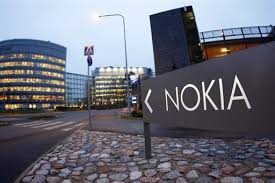
As beleaguered handset maker Nokia continues to downsize its operations to conserve cash, the handset maker is looking to sell its global headquarters in Espoo, Finland for a price of up to $387 million (€300 million). The news was first reported by the Finnish-language Helsingen Sanomat, with the real-estate price estimate coming from Ilta-Sanomat. A Nokia spokesperson has confirmed to TechCrunch that it is evaluating this option, but that it may end up leasing back the same building, and in any case has no plans to leave Finland in the process.
“As we said during Q2 results, Nokia is re-evaluating all non-core operations, including its real estate. However, we do not have any plans to move our headquarters,” a spokesperson said in an email (emphasis Nokia’s). “As with most companies whose core business is not in owning real estate, it makes common business sense not to tie assets in real estate property but rather invest and focus in its core operations.
 “Divesting real estate is an entirely different thing compared to the location of the headquarters. As we have said many times before, we have no plans to move our headquarters.”
He points out that selling and re-leasing property is “not unusual” in Finland, with Kone doing the same in Keilaniemi in 2007. Similarly, UPM sold their headquarters in 2006 and Stora Enso did the same in 2008.
“It’s just a case of looking at our options when it comes to real estate and beyond,” he told TechCrunch.
Nokia is planning to cut some $2 billion in costs by the end of 2013. That has included some 10,000 jobs, several factories, and other assets such as its Qt development platform operations as well as patents. And although Nokia is a flagship Finnish business, there have been other signs that it is downsizing its presence in that country. Among the factories that have been closed down globally is the last one remaining in Finland.
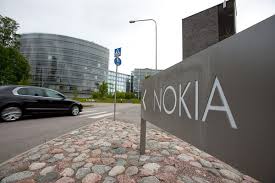 Nokia’s move to turn itself around has been built around the company’s new smartphone devices build on Microsoft’s Windows Phone operating system, as well as deals for its smaller business in maps. Last quarter’s earnings showed that so far this strategy is slow in developing. It said it had sold 4 million Lumia Windows Phone devices, with feature phones still its biggest growth segment.

