Showing posts with label Budget 2010-Analysis. Show all posts

Friday, March 19, 2010

Budget 2010: Govt raises allocation for MSME at Rs 2400 cr for 2010-11


19 Mar 2010, 1610 hrs IST,
Source:PTI
MSME


NEW DELHI: The government  proposed to

increase allocation for the Micro, Small and Medium Enterprises
(MSMEs) sector by over Rs 600 crore
to Rs 2,400 crore for 2010-11.


MSMEs, which employs about 60 million people and contributes
about 40 per cent to India's overall exports,
were badly hit by the global slump in demand.

"I propose to raise the allocation for this sector
from Rs 1,794 crore to Rs 2,400 crore for the
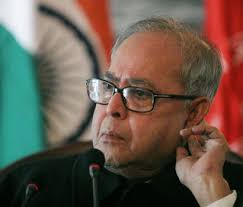
year 2010-11, Finance Minister Pranab Mukherjee
said while presenting Budget 2010-11.

The MSME Ministry had sought Rs 5,000-Rs 5,500 crore
over the next three years to implement the recommendations of the task force.

There are 26 million MSMEs in the country, contributing
about 45 per cent to India's total manufactured output.

Friday, March 12, 2010

Budget 2010: Deemed gifts under the Income Tax Act


Mar 12, 2010

1. Existing Provision

Clause (vii) has been inserted in section 56(2) by the Finance (No. 2) Act, 2009. Under this clause if an individual or a HUF receives on or after October 1, 2009 a gift (which falls in any of the following five categories), it is chargeable to tax in the hands of the recipients under the head “Income from other sources”.

A gift is chargeable to tax under section 56(2)(vii) if it satisfies the following conditions —

• It is received by an individual or a HUF.

• It is received on or after October 1, 2009.

• The gift falls in any of the following five categories.

• The gift does not fall in the exempted category. The five categories are as under:

• Any sum of money (gift in cash or by cheque or draft).

• Immovable property without consideration

• Immovable property for a consideration which is less than the stamp duty value

• Movable property without consideration

• Movable property for a consideration which is less than fair market value

While calculating the above monetary limit of Rs. 50,000 in any of the five categories, any sum of money or property received from the following shall not be considered—

• Money/property received from a relative.

• Money/property received on the occasion of the marriage of the individual.

• Money/property received by way of will/inheritance.

• Money/property received in contemplation of death of the payer.

• Money/property received from a local authority.

• Money/property received from any fund, foundation, university, other educational institution, hospital, medical institution, any trust or institution referred to in section 10(23C ).

• Money received from a charitable institute registered under section 12AA

2. Proposed amendments


(i) Amendment of section 2

3. In section 2 of the Income-tax Act,—

(b) in clause (24), in sub-clause (xv), after the words, brackets and figures “value of property referred to in clause (vii)”, the words, brackets, figures and letter “or clause (viia)” shall be inserted with effect from the 1st day of June, 2010.

From Notes on Clauses:

The existing provision contained in sub-clause (xv) of clause (24) of the aforesaid section provides that any sum of money or value of property referred to in clause (vii) of sub-section (2) of section 56 will fall within the definition of “income”.

Sub-clause (b) proposes to amend sub-clause (xv) to also make a reference therein to value of property referred to in the proposed clause (viia) to sub-section (2) of section 56. This amendment is consequential to the amendment made vide sub-clause (b) of clause 21 of the Bill.

This amendment will take effect from 1st June, 2010 and will, accordingly, apply in relation to the assessment year 2011-2012 and subsequent years.

(ii) Amendment of section 49

In section 49 of the Income-tax Act,—

(b) in sub-section (4), after the word, brackets and figures “clause (vii)”, at both the places where they occur, the words, brackets, figures and letter “or clause (viia)” shall be inserted with effect from the 1st day of June, 2010.

From Notes on Clauses:

Under the existing provision contained in sub-section (4) of section 49, where the capital gain arises from the transfer of a property, the value of which has been subject to income-tax under clause (vii) of sub-section (2) of section 56, the cost of acquisition of such property shall be deemed to be the value which has been taken into account for the purposes of the saidclause (vii).

Sub-clause (b) proposes to amend the aforesaid sub-section so as to provide that the cost of acquisition of such property shall be deemed to be the value which has been taken into account for the purpose ofclause (viia) of sub-section (2) of section 56 also.

This amendment is consequential to the amendment made vide sub-clause (b) of clause 21 of the Bill and will take effect from 1st June, 2010 and will, accordingly, apply to the assessment year 2011-2012 and subsequent years.

(iii) Amendment of section 56

In section 56 of the Income-tax Act, in sub-section (2),—

(a) in clause (vii),—

(i) for sub-clause (b), the following sub-clause shall be substituted and shall be deemed to have been substituted with effect from the 1st day of October, 2009, namely:—

(b) any immovable property, without consideration, the stamp duty value of which exceeds fifty thousand rupees, the stamp duty value of such property;”;

(ii) in the Explanation, in clause (d),—

(a) in the opening portion, for the word “means—”, the words “means the following capital asset of the assessee, namely:—” shall be substituted and shall be deemed to have been substituted with effect from the 1st day of October, 2009;

(b) in sub-clause (vii), the word “or” shall be omitted with effect from the 1st day of June, 2010;

(c) in sub-clause (viii), the word “or” shall be inserted at the end with effect from the 1st day of June, 2010;

(d) after sub-clause (viii), the following sub-clause shall be inserted with effect from the 1st day of June, 2010, namely:—

“(ix) bullion;”;

(b) after clause (vii), the following shall be inserted with effect from the 1st day of June, 2010, namely:—

(viia) where a firm or a company not being a company in which the public are substantially interested, receives, in any previous year, from any person or persons, on or after the 1st day of June, 2010, any property, being shares of a company not being a company in which the public are substantially interested,—

(i) without consideration, the aggregate fair market value of which exceeds fifty thousand rupees, the whole of the aggregate fair market value of such property;

(ii) for a consideration which is less than the aggregate fair market value of the property by an amount exceeding fifty thousand rupees, the aggregate fair market value of such property as exceeds such consideration:

Provided that this clause shall not apply to any such property received by way of a transaction not regarded as transfer under clause (via) or clause (vic) or clause (vicb) or clause (vid) or clause (vii) of section 47.

Explanation.—For the purposes of this clause, “fair market value” of a property, being shares of a company not being a company in which the public are substantially interested, shall have the meaning assigned to it in theExplanationtoclause (vii)

From Notes on Clauses:

Clause 21 of the Bill seeks to amend section 56 of the Income-tax Act relating to income from other sources.

Under the existing provisions contained in sub-clause (b) of clause (vii) of sub-section (2) of the aforesaid section, if an assessee being an individual or a Hindu undivided family receives any immovable property without consideration or for inadequate consideration, the value of the said property shall be treated as income in the hands of assessee and shall be liable to tax.

It is proposed to substitute the aforesaid sub-clause (b) of clause (vii) of sub-section (2) of the aforesaid section so as to provide that clause (vii) of sub-section (2) of section 56 would apply only if the immovable property is received without any consideration and to remove the stipulation as regards inadequate consideration.

This amendment will take effect retrospectively from 1st October, 2009, and will, accordingly, apply in relation to the assessment year 2010-2011 and subsequent years.

Under the existing provisions contained in clause (d) of the Explanation to clause (vii) of sub-section (2) of the aforesaid section, certain properties have been enumerated within the definition of “property”.

It is proposed to amend the aforesaid clause (d) of the Explanation to clause (vii) of sub-section (2) so as to specify that clause (vii) of sub-section (2) of the aforesaid section will have application to “property” which is in the nature of capital asset of the assessee.

This amendment will take effect retrospectively from 1st October, 2009, and will, accordingly, apply in relation to the assessment year 2010-2011 and subsequent years.

It is also proposed to amend clause (d) of the said Explanation to insert a new sub-clause (ix) so as to include “bullion” within the specified categories of property.

This amendment will take effect from 1st June, 2010, and will, accordingly, apply in relation to the assessment year 2011-2012 and subsequent years.

Under the existing provisions contained in clause (vii) of sub-section (2) of the aforesaid section, if an assessee who is an individual or a Hindu undivided family receives specified property without consideration or for inadequate consideration from persons other than relatives defined in the said section, the value of the said property shall be treated as income in the hand of assessee and shall be taxed.

It is proposed to insert a new clause (viia) in sub-section (2) of the aforesaid section so as to include the transactions undertaken in shares of a company not being a company in which the public are substantially interested where the recipient is a firm or a company not being a company in which the public are substantially interested.

This amendment will take effect from 1st June, 2010, and will, accordingly, apply in relation to the assessment year 2011-2012 and subsequent years.

(iv) Amendment of section 142A

In section 142A of the Income-tax Act, in sub-section (1), for the words, figures and letter “section 69B is required to be made”, the words, figures, letter and brackets “section 69B or fair market value of any property referred to in sub-section (2) of section 56 is required to be made” shall be substituted with effect from the 1st day of July, 2010.

From Notes on Clauses:

Clause 33 of the Bill seeks to amend section 142A of the Income-tax Act relating to estimate by Valuation Officer in certain cases.

The existing provisions contained in sub-section (1) of the aforesaid section provide that where an estimate of the value of any investment referred to in section 69 or section 69B or the value of any bullion, jewellery or other valuable article referred to in section 69A or section 69B is required for the purpose of making an assessment or re-assessment under the Act, the Assessing Officer may require the Valuation Officer to make an estimate of such value and report the same to him.

It is proposed to amend the said sub-section (1) so as to also enable the Assessing Officer to make reference to the Valuation Officer for making an estimate of fair market value of any property referred to in sub-section (2) of section 56 of the Act.

This amendment will take effect from 1st July, 2010.

3. From Explanatory Memorandum

Taxation of certain transactions without consideration or for inadequate consideration

Under the existing provisions of section 56(2)(vii), any sum of money or any property in kind which is received without consideration or for inadequate consideration (in excess of the prescribed limit of Rs. 5 0,000/-) by an individual or an HUF is chargeable to income tax in the hands of recipient under the head ‘income from other sources’. However, receipts from relatives or on the occasion of marriage or under a will are outside the scope of this provision.

The existing definition of property for the purposes of section 56(2)(vii) includes immovable property being land or building or both, shares and securities, jewellery, archeological collection, drawings, paintings, sculpture or any work of art.

A. These are anti-abuse provisions
which are currently applicable only if an individual or an HUF is the recipient. Therefore, transfer of shares of a company to a firm or a company, instead of an individual or an HUF, without consideration or at a price lower than the fair market value does not attract the anti-abuse provision

In order to prevent the practice of transferring unlisted shares at prices much below their fair market value, it is proposed to amend section 56 to also include within its ambit transactions undertaken in shares of a company (not being a company in which public are substantially interested) either for inadequate consideration or without consideration where the recipient is a firm or a company (not  being a company in which public are substantially interested). Section 2(18) provides the definition of a company in which the public are substantially interested.

It is also proposed to exclude the transactions undertaken for business reorganization, amalgamation and demerger which are not regarded as transfer under clauses (via), (vic), (vicb), (vid) and (vii) of section 47 of the Act.

Consequential amendments are proposed in—

(i) section 2(24), to include the value of such shares in the definition of income;

(ii) section 49, to provide that the cost of acquisition of such shares will be the value which has been taken into account and has been subjected to tax under the provisions of section 56 (2).

These amendments are proposed to take effect from 1st June 2010 and will, accordingly, apply in relation to the assessment year 2011-12 and subsequent years.

B. The provisions of section 56(2)(vii)
were introduced as a counter evasion mechanism to prevent laundering of unaccounted income under the garb of gifts, particularly after abolition of the Gift Tax Act. The provisions were intended to extend the tax net to such transactions in kind. The intent is not to tax the transactions entered into in the normal course of business or trade, the profits of which are taxable under specific head of income. It is, therefore, proposed to amend the definition of property so as to provide that section 56(2)(vii) will have application to the ‘property’ which is in the nature of a capital asset of the recipient and therefore would not apply to stock-in-trade, raw material and consumable stores of any business of such recipient.

C. In several cases of immovable property
transactions, there is a time gap between the booking of a property and the receipt of such property on registration, which results in a taxable differential. It is, therefore, proposed to amend clause (vii) of section 56(2) so as to provide that it would apply only if the immovable property is received without any consideration and to remove the stipulation regarding transactions involving cases of inadequate consideration in respect of immovable property.

These amendments are proposed to take effect retrospectively from 1st October, 2009 and will, accordingly, apply in relation to the assessment year 2010-11 and subsequent years.


D. It is proposed to amend the definition of ‘property’ as provided under section 56 so as to include transactions in respect of ‘bullion’.

This amendment is proposed to take effect from 1st June, 2010 and will, accordingly, apply in relation to the assessment year 2011-12 and subsequent years.

E. It is proposed to amend section 142A(1)
to allow the Assessing Officer to make a reference to the Valuation Officer for an estimate of the value of property for the purposes of section 5 6(2).

This amendment is proposed to take effect from 1st July, 2010.

4. Highlights of the amendment

• A new clause (viia) is inserted in Section 5 6(2) to include within its ambit transactions undertaken in shares of a closely held company either for inadequate consideration or without consideration where the recipient is a firm or a closely held company.

• If the property received by way of gift constitutes stock in trade of the recipient, it shall not be liable to tax. (w.r.e.f. 01.10.09)

• The deemed gift concept introduced by the Finance (No.2) Act, 2009 in case of immovable

properties purchased at less than the stamp duty value has been removed w.r.e.f. 01.10.09.

• W.e.f. 01.06.10, even gift of bullion is liable to tax as income u/s. 56(2)(vii).

• Assessing Officer has been conferred with the power to make reference to the Valuation Officer u/s. 142A for the purpose of ascertaining fair market value for taxability of gifts u/s. 56(2)(vii).


http://businessfinanceindia.blogspot.com/

Tuesday, March 9, 2010

Budget 2010: Empowered Income tax department to cancel any charitable organisation’s registration


Mar 9, 2010

The Income Tax department has got the power

to cancel any charitable organisation’s registration that
accords it the benefit of tax exemption. 

The department can annul the registration and the
exemption emanating from it if the organisation is
found to violate the norms for registration,
according to Budget 2010-11.

By this move, the government has made its intent to prevail
over a series of court judgments, which held that the I-T department
did not have the right to cancel registration of organisations with it.

The government provides relief to specified not-for-profit
or charitable organisations under Section 12A of the Income
Tax Act. A registration with the Income Tax department
cannot be taken away by an I-T commissioner if violations
are found, some courts had said earlier.

However, the Budget proposal has said,
“The power of cancellation of registration is inherent
and flows from the authority of granting exemption.”

Many organisations that are registered under the Section of
the I-T law have had a tiff with the department that sought to
cancel their registration on alleged violations of the rules.

Such organisations have to maintain books of accounts for any
commercial activity undertaken by them and if they fail to do so,
the taxman enjoys the authority to question the concerned entity
on the issue. The Budget proposal now gives the taxman the
additional power to cancel the registration.

There were instances where the exemptions were being misused
by the organisations, official sources said, adding that the object
of the organisation stated in the registration was often changed
without any knowledge of the tax department.

“I think this (the Budget proposal to empower the I-T department
is an appropriate move. Someone who gives a licence or
with whom you register, the same organisation should also
have the power to cancel the registration or licence,” said
senior chartered accountant and ICAI vice-president G Ramaswamy.

In 2008, however, in a case of an appeal made by NGOs
whose registration was cancelled by the tax department,
the court had said that such a measure cannot be taken.

The Budget proposal has pointed out that judicial rulings
in some cases have held that commissioner does not have
the power to cancel the registration obtained by a trust
or institution as it is not specifically mentioned in Section 12AA.

“It is therefore, proposed to amend Section 12AA
so as to provide that the commissioner can also
cancel the registration obtained under Section 12AA,”
the Finance Bill 2010-11 has said. 
 
Charitable organisations would, however,
be given a chance to be heard by the tax
commissioner before he decides to cancel the registration.

Saturday, March 6, 2010

Builders not peased with Budget details


Raghavendra Kamath & Kalpana Pathak / Mumbai March 6, 2010, 0:47 IST

The devil is in the detail for the real estate sector.

Though the Budget gave sops to home buyers in the form
of tax savings and interest rate subvention, it quietly 
brought back service tax on lease rentals in the Finance Bill.


Builders said they’d pass on the service tax burden to
customers. The silver lining was that the continuation
of interest rate subvention and higher disposable income
in the hands of individuals through income tax reliefs
would more than make up for it.

The Budget announced a maximum tax savings of Rs 20,000
for those earning an annual income up to Rs 5 lakh and up
to Rs 50,000 for those earning up to Rs 8 lakh.
This additional income is likely to find its way towards buying homes.

Says Aashiesh Agarwaal, research analyst at Edelweiss
Capital: “For people getting an annual income of Rs 8 lakh, there will be a saving of 10 per cent, which will increase disposable income and their affordability. This will mean they can pay a higher EMI and be eligible for loans of higher value.’’

This Budget also extended the interest rate subvention
on a housing loan up to Rs 10 lakh where the house price
is up to Rs 20 lakh, announced in the earlier Budget, to
March 31, 2011. But, many developers are unimpressed.
“Overall, home sales may go up, but there is no incentive fo
developers to launch more affordable housing projects.
Why should we?’’ said Niranjan Hiranandani, managing director
of Hiranandani Constructions.

SERVICE TAX WORRY

The biggest worry of developers is re-introduction of service
taxes. In April 2009, the Delhi High Court stayed the tax on
lease rents when some retailers approached it, opposing the
government move to impose it. According to the Finance Bill,
service tax would be levied for renting immovable property or
any other service to such renting with retrospective effect from
June 1, 2007. The service tax rate is 10 per cent now.

Buildings under construction and the leasing of vacant land
would also attract service tax, the Bill says.

“The levy of service tax will increase the price of properties.
This has come as a dampener, as even renting under-construction
property will attract service tax now,’’ says Jai Mavani, executive
director and head of the real estate practice at KPMG.

Some developers are unmoved.
“We will transfer the service tax to home
buyers and to that effect there will not be
any additional liability,’’ said Sarang Wadhawan,
managing director of HDIL, a Mumbai-based developer.

OTHER SPURS

Though the Budget allowed projects started
before March 31, 2008, to be completed within
five years instead of four for claiming deduction
of their profits as “one-time relief to the sector’’,
developers and consultants said the measure does not help much.

“It is unfortunate that the commencement date of March 31, 2008,
has not been extended but the period for implementation
has been extended by one year. Hence, the impact of the
amendment would be marginal,’’

said Pranay Vakil, chairman of Knight Frank India,
an international property consultant.

However, the hotel industry gave a thumbs-up to the finance
minister’s move to give investment-linked deduction to new
hotels in two-star or above categories.

The benefit was hitherto available to certain states such as
Uttarakhand and Himachal Pradesh; it has been extended to all.

It allows 100 per cent deduction in respect of the whole of any
expenditure of a capital nature (other than on land, goodwill and financial instruments).

“It’s a good measure that will boost investment in the tourism
sector, with high employment potential. Also, the fact that the
benefit is made available to hotels across the board will boost
investment in all categories,” said a Delhi-based analyst.

Tuesday, March 2, 2010

TDS deposited before Filing of Return of Income then No Disallowance


It is proposed that no disallowance of the expenditure 
which is subject to TDS provision will be made, if a
fter deduction of tax during the previous year, tax has 
been paid on or before the due date of filing of return of 
 income. 

This is effective from Assessment Year 2010-11 onwards

Increase in Rate of Interest for late deposit of TDS

The rate of interest on late deposit of tax deducted has 
been increased from 12% p.a. to 18% p.a. with effect from July 1, 2010.

Rationalisation of provisions relating to TDS

 Threshold for the purpose of deducting TDS has been increased with effect from 
July 1, 2010 in view of rising inflation and reducing compliance burdens.

Individual tax-payers will now have more money to save or splurge


Sanket Dhanorkar 
and Pratibha Kamath


Revised income-tax slabs to increase disposable
incomes; consumers, who have been feeling the 
pinch of rising prices, now have something to cheer about.

Amidst all the debate about fiscal consolidation and roll-back 
of excise duty concessions, the finance minister has created
quite a flutter in an unexpected area. 

The Union Budget for 2010-11 has provided 
individual taxpayers with some welcome revisions
in tax slabs that would effectively put more money 
into their wallets. Consumers, who have been feeling 
the pinch of rising prices, now have something to cheer about.

The revised tax slabs will be as under:
 Income upto Rs 1.6 lakh
 Nil
 Income above Rs 1.6 lakh and upto Rs. 5 lakh
 10 per cent
 Income above Rs. 5 lakh and upto Rs. 8 lakh
 20 per cent
 Income above Rs. 8 lakh
 30 per cent
                                           

While the primary threshold (amount up to which no tax is payable) 
remains unchanged at Rs1.6 lakh, the income bracket falling under
the 10% tax slab has been revised to Rs1.6 lakh-Rs5 lakh. 

Previously, this bracket was fixed between Rs1.6 lakh-Rs3 lakh.
Similarly, the second slab of 20% tax has been fixed at Rs5 lakh-Rs8 lakh 
(from Rs3 lakh-Rs5 lakh earlier). The highest tax slab of 30% will now 
be charged on income in excess of Rs8 lakh, compared to Rs5 lakh earlier.

This dramatic shift in the direct tax policy means a savings
bonanza for the inflation-hit consumer.
Here is how your savings will shape up under the new tax system:
Suppose you earn an annual income of Rs4lakh,
your tax incidence (excluding education cess) will now 
amount to Rs24,000, instead of Rs34,000 earlier—a saving of Rs10,000.

A person earning Rs6 lakh will shell out Rs54,000 in taxes. 
In this case, the savings compared to the earlier tax 
code will amount to a whopping Rs30,000.
Similarly, a person in the highest tax slab, earning say, Rs9 lakh, 
will be able to save a phenomenal Rs50,000 from the tax differential.

This is not the only carrot extended by the government, either. 
The existing tax-saving limit of Rs1 lakh has also
been raised by an additional amount of Rs. 20,000 for
investment in long-term infrastructure bonds.

Industry experts have welcomed the move. Ranjeet Mudholkar,
principal advisor, Financial Planning Standards Board India, 
said, “The further slackening of income-tax slabs will benefit 60% of tax-payers. 
Apart from these, a tax payer can also avail deduction of Rs20,000 for
investment in infrastructure bonds as notified by the Government, 
in addition to the limit of Rs1 lakh under Section 80C. 

Hence, from the perspective of financial planning, a tax-payer
can channelize more funds towards their chosen financial 
goals despite earning the same income.
Also, to optimise the use of excess disposable 
income, a tax-payer should employ strategic asset
allocation towards better asset-creation in future.”

Nikhil Bhatia, executive director at PricewaterhouseCoopers 
believes this is an indication of how the slab rates will move from 
here onwards. “I think it is a step in the right direction.
Under the direct tax code (DTC), the tax slab rates are 
expected to go up substantially. In that sense, it is not much 
of a surprise because an indication of this was coming through 
from the DTC itself, where the marginal tax rate has been 
proposed at Rs25 lakh. It is a populist move; one which 
will leave more money in the hands of the individual”, he said.

Dr Suresh Surana, founder, RSM Astute Consulting Group, 
agreed, “The finance minister has attempted to take the tax-payer
on the road to the new Direct Tax Code (DTC) (proposed
to become effective from 1 April 2011), by bringing the income-tax
slab rates in sync with those proposed in the DTC.”

Contributions to the Central Government Health Scheme
have also been allowed as deductions within the overall 
ceiling for tax rebate, besides contributions to health insurance
schemes which are currently allowed as deductions under the Income Tax Act.

The proposals on direct taxes are estimated to result in a
revenue loss of Rs26,000 crore for the government.

Monday, March 1, 2010

India Budget 2010:quick reactions

 
 http://www.merinews.com/upload/thumbimage/1226573909356_Pranab%20Mukherjee_t.bmp

Ease of Doing Business: Incremental Steps But Right Intent
 
The major concern surrounding private investment in India has been the ease of doing business. The budget addresses some of these concerns, albeit through incremental measures. Clarification of the capital gains treatment on the conversion to LLPs will ease compliance requirements for private businesses that convert. The easing of tax audit limits, some rationalization in the limits for TDS and the increased time limit for payment of Tax Deduction at Source will also ease compliance, especially for small businesses. That the rollout of the Direct Tax Code was not delayed beyond 1 April 2011 is also a signal in the right direction towards a simplified tax regime. Granting additional banking licenses should aid the flow of industrial credit. However, these have only been incremental steps and measures towards higher FDI limits and a simplified corporate law would aid this further.

--Sidharth J. Negandhi
 
Giving the Bottom of the Pyramid its Due
 
The budget has laid down a roadmap towards inclusive growth with clear measures to promote growth at the bottom of the pyramid. The rollout of the nutrient-based subsidy augurs well for agricultural productivity. Seeking private participation in food grain storage capacity and allowing external commercial borrowing to be raised for food processing is a step forward in creating a robust food supply chain that benefits producers though more concrete measures such as tax holidays may have acted as additional stimulants. Also, a mere moratorium for payment of farm loans as opposed to a waiver signals that the onus of performance lies with the farmers. Setting up a national social security fund and the interest subvention for low cost housing create a rounded structure for development at the bottom of the pyramid.

--Sidharth J Negandhi
 
A New, Definite Direction Towards a Direct Tax Code
 
Budget 2010 is a turning point in the move from the current tax regime to the Direct Tax Code. The extent of the measures may be argued in light of sufficiency, but the direction and intentions are very clear. The reshuffling of the tax slabs upwards is a step towards what the DTC regime proposes. Increase in the 80C (includes provident fund, life insurance premium, pension plans, mutual fund investments, infrastructure bonds and national savings certificate) exemption limit. especially targeting the infrastructure sector is also a key reform. The increase in the limit for tax audit, reduction of surcharge for companies, allowing business activities up to Rs. 10 lakhs, introduction of the Saral II form for individuals, change in provisions for deductibility vis-à-vis late deposit of Tax Deducted at Source are all steps towards rationalizing the tax regime into one that is more tax-payer friendly and transparent.

--Manas Mody
 
No More Holiday for the Tech Sector
 
Disappointing the IT & ITES sector, the finance ministry decided not to extend the tax holiday beyond its expiry on March 31, 2010. In addition, the Minimum Alternative Tax has been increased to 18% from 15%. As a result, the IT & ITES sector will be adversely affected. The sector contributes about 25% of India's export revenues and about 5% to GDP. This sector employs about 10 million people directly and indirectly. Clearly, sustenance and growth of the IT & ITES sector is essential if India's economy is to achieve double digit growth. Also, given the macro-economic environment and the need of the IT & ITES companies (especially the small and medium-sized ones) for fiscal support, it would have been most prudent to extend the tax holiday for a few more years. Unfortunately, the budget turned out to be unfavorable.

--Mahesh Yellai
 
Positive Though Slow Move Towards Fiscal Consolidation
 
The budget has retained Service Tax at 10%. The base excise duty rate on major non-petroleum products have been hiked to 10% from 8% as a roll back of the stimulus measure taken last year. These moves outline a positive movement towards fiscal consolidation. The fine print says that the proposal for common rates for a wide variety of products and services go beyond just intent and actually pave the way for a smoother implementation of Goods and Services Tax code by the new proposed deadline of 1st April, 2011. However, considering that the current year is a non election year, the measures could have been more drastic especially given that the Direct Tax Code has also been pushed to a later implementation date. The budget also does not make any amendments to Central Sales Tax rates which were proposed to be phased out gradually prior to the commencement of GST.

--Somesh Satnalika
 
A Lack of Political Will in Education
 
It is a watershed year for the education sector in India with the Right to Education Act becoming operational from April 1, 2010. The budget has increased the allocation for education to 31,036 crore rupees from 26,900 crore rupees. The states will have access to a further 3675 crores through the Finance Commission. While this is a higher allocation, this still constitutes only about 4.5% of expected GDP, much lower than a number of other developing nations. The Finance Minister has followed the old adage of throwing more money in to build more schools and hard infrastructure, and there is no clarity on proposals for improving the quality of instruction and teachers. Year after year, we find that the Sarva Shiksha Abhiyaan has unspent amounts, and increasing inefficiencies in the delivery of quality education. The budget has stopped short of any firm commitment for the implementation of the Right to Education Act or providing the right incentives for state and private players to contribute to this mission. Overall, a plaid budget for the education sector, displaying a lack of political will to implement the Right to Education Act and making quality education a reality for all the children.

--Vignesh Nandakumar
 
More Money in Consumers' Pockets
 
The Finance Minister's promise of making the budget for the common man's benefit was fulfilled at least in terms of direct taxes. From the point of view of the individual tax payer the increase in slab limits, with the maximum slab over Rs 8 lakhs to be taxed at 30% aims to provide relief to over 60% of tax payers.
For Indian companies too there is a strong promise with the introduction of the new direct tax code from April 1, 2011. However, the Minimum Alternate Tax increase from 15% to 18% is a bit of a blow. The budget aims to earn a net gain from direct taxes of approx Rs 20,500 crores which will put more money in the hands of the consumer and in turn boost consumer spending.

--Salome Shah
 
Positive Budget for New and Existing Sources of Power
 
This is a remarkable budget for the energy sector, particularly given the visible and strong steps taken towards renewable power. The allocation of Rs 1000 cores towards the Jawaharlal Nehru National Solar Mission and the establishment of a Clean Energy Fund are very positive stimulus for further investment by the private sector and towards making India a significant renewable energy player. The budget has kept all supply options open by providing an allocation for micro-hydel plants, particularly in parts of the country where it makes more sense, e.g. Ladakh.
The budgetary allocation for addition of power capacity has been doubled from last year – particularly focused on introducing critical technology into the sector. This, coupled with the change in the Mega Power Policy, is likely to bring down the cost of power. The introduction of new technologies will also hopefully increase the efficiency of our power plants and transmission and distribution.
The establishment of a Coal Regulatory Authority for competitive bidding of the coal reserves is a step in the right direction to encourage more players to enter the field, thereby allowing for more efficient usage of limited resources, and will serve to break the entrenched monopoly in the coal sector.
In all, a very positive budget for the power sector, for both the existing and new sources of power. This could genuinely translate into more innovative technologies transforming the sector and a significant increase in output to meet current demand.

-Vignesh Nandakumar
 
Markets Cheer Budget 2010
 
With uncertain signals emanating from North Block, the expectations for Budget 2010 were extremely low. Markets were thus pleasantly surprised by a balanced budget that may be best described as one that signaled the continued commitment to the reforms process, managing the fiscal deficit and spurring economic growth. The attempts to spell out implementation timelines for programs such as the Goods and Services Tax and the Direct Tax Code, as well as take action on items such as fuel prices was clearly appreciated. While consumption is linked more to credit, markets cheered the message from the minister that he will put more money in the hands of consumers through changes in the personal tax structure. While questions remain on issues such as whether an extension of debt repayment would indeed improve banks' non-performing assets, and how firm the plans are to make the famed GST and DTC operational in April 2011, the overall feel good nature and the lack of unpleasant surprises buoyed market sentiment. [As of about 2:20, the Sensex was up 281.75 points, at 16,535.95.]

--Prashant Krishnan
 
More Licenses to NBFC and Private Players, a Welcome Move
 
Overall, the Budget announcements spell good news for the financial sector. However, the implementation and regulations to follow will determine the efficacy and benefits to be derived from the changes made.
Given that the lion's share of the populous banks are the Public Sector Unit banks, the Rs. 16,500 crore allocated to PSUs could help them revamp their operations and bring in greater efficiency and raise the standards of services offered. It would also serve to help them expand operations and mobilize savings in rural areas and small towns.
The icing on the cake is more licenses to Non Banking Financial Companies and private players, something they have been eagerly waiting for and which comes to them in small numbers. For this reason, they are traditionally concentrated in bigger towns and have not managed to extend their reach. Their presence in Tier-2 cities would not only give consumers more opportunities to borrow and invest but it will also raise standards of public sector offerings in the same area. Regulation though will continue to have to be watched in this space.
Hopefully, this will provide a stimulus for the economy to move towards greater freedom to multinational banks and financial institutions.
It was disappointing to not hear of any increased Foreign Direct Investment limits in banks/insurance companies/stock exchanges which would help develop the financial sector further.

--Husna Ilyas Ghouse
 
Exemption on Long-term Infra Bonds, the Only Silver Lining for Infrastructure
 
The proposals for infrastructure in the Union Budget 2010 were disappointing to say the least. No mention of the subsidy roll-back, in line with the Parekh committee recommendations, means that the government will have to foot an unserviceable and rising subsidy bill for yet another year. The 1 rupee hike in central excise duty seems a half-hearted measure of controlling the subsidy bill. What was more disheartening was the opposition outburst and walk-out on this announcement, which indicates that it might be passed on to citizens.
[India broker]
A broker reacts while trading during the presentation of India's federal budget, at a stock brokerage in Mumbai February 26, 2010.
On the taxation front, the repeated postponement of the Goods and Services Tax by another year to April 2011 was again disappointing. While the centre-state revenue sharing arrangements still need to be resolved, yet another year is a long time and the country will lose out on the immediate efficiency improvement s that the GST will bring on the infrastructure and logistics front. In addition, what's to say that the government will stand by its promise of implementing the GST next year as well – just another case of bureaucratic lethargy?
The silver lining is the exemption of 20,000 rupees on personal income for long-term infrastructure bonds, which should stimulate retail investment in infrastructure.

--Kartik Rajendran
 
Is Simply Pushing the Nutrient Fertilizer Subsidy Program Enough?
 
While it was heartening to hear the finance minister announce the introduction of nutrient-based fertilizer subsidy program from 1 April 2010, this might not be enough to alleviate sector concerns.
Rather than the fertilizer subsidy regime, the inputs going into the subsidy calculations – global raw material prices, energy consumption contirbute more to cost build-up.
Though the new regime will compensate fertilizer companies for the costs they incur, it will help little in optimization of the costs themselves. The finance minister has failed to lay out a management framework that would insulate against volatile commodity prices, energy consumption inconsistencies and ensure overall operational efficiency. The mere implementation of the new nutrient based regime will more likely pass on the burden to the tax payer.

--Soumitra Sharma

Budget 2010-: India to Be Ready to ‘Correct’ Budget If Fiscal Target at Risk


Feb. 28  -- India’s government must be ready to take “corrective steps” to achieve its fiscal deficit- reduction target for next year should its budget assumptions start falling through, an aide to the prime minister said. 

“You must be ready to correct yourself if things go wrong,” Montek Singh Ahluwalia, 66, said in an interview in his office in New Delhi yesterday. The goal of reducing the budget deficit to 5.5 percent of gross domestic product for the financial year starting April 1 “absolutely” must be met and “something will have to be done” if it’s endangered, he said. 

India must convince investors it is committed to the deficit reduction, in part because the nation needs overseas capital to finance a current-account deficit. That shortfall may reach 2.5 percent of GDP from 2.2 percent as domestic demand grows more strongly than exports, according to Ahluwalia. 
 
“We need to remain an investor-friendly environment,” said Ahluwalia, who is the deputy chairman of the Planning Commission, an agency that sets India’s growth and investment targets. He refrained from specifying what new efforts the government should be ready to adopt to maintain its fiscal goal. 

Finance Minister Pranab Mukherjee two days ago unveiled a budget proposal featuring tax increases and 400 billion rupees ($9 billion) of state asset sales to help shrink the deficit from a 16-year high of 6.9 percent of GDP. 

Budget Plan
The budget, betting on a faster global expansion in 2010, has assumed a nominal economic growth rate of 12.5 percent in India, helping boost tax revenues by 18 percent. It also aims to mobilize another 350 billion rupees by auctioning frequency licenses to mobile-phone operators. 

JPMorgan Chase & Co. Mumbai-based analysts Jahangir Aziz and Gunjan Gulati called it a “risky” plan, saying it was based “narrowly on a few adjusters” to bring down the shortfall. 

“The global economy can turn up nasty surprises,” the analysts said. “If a few things go wrong, the budget will look shaky.” 

For now, indications are that the world economy is recovering from the first global recession since World War II. The U.S. and U.K. economies grew faster-than-expected in the fourth quarter. 

The U.S. economy expanded at a 5.9 percent annual rate in the last three months of 2009, more than the government’s estimate last month, reflecting stronger business investment. Gross domestic product in Britain rose 0.3 percent last quarter, compared with a previous calculation of 0.1 percent gain, as the nation emerged from the recession.
Assuming ‘Optimism’ 
 
“We are making a set of assumptions which do build an optimism,” the Oxford-educated Ahluwalia said. “The important thing is that if they turn out to be different, are you going to react to make sure that you don’t continue to be optimistic when the facts don’t warrant.” 

In India, the latest data for industrial production showed output gained 16.8 percent in December, the fastest pace since at least 1994 as sales at carmakers and cement producers gained. 
 
Mukherjee told business chambers in New Delhi yesterday that the government had to cut next year’s budget deficit to facilitate credit flow to companies. 

Grasim Industries Ltd., India Cements Ltd. and other producers of the building material sold 15 percent more in January from a year earlier. Sales at Tata Motors Ltd. and other local car manufacturers rose 32 percent to a record in January. 

Foreign Investments 
 
That’s helped foreign investments to flow into India even with a decline in global capital flows, Mukherjee said in parliament on Feb. 26. India got $20.9 billion in the nine months to Dec. 31 compared with $21.1 billion in the same period last year, he said. 
 
“We are looking actively at having a policy environment which encourages foreign direct investments and other flows but not short-term capital flows,” said Ahluwalia, who worked as the top bureaucrat in the Ministry of Finance in 1991 when Prime Minister Manmohan Singh, then Finance Minister, opened the economy to foreign investors. Ahluwalia left the finance ministry in 1998 to join the Planning Commission as a member. 
 
Ahluwalia said India wants foreign direct investments to finance the country’s current account gap.
He also said India contributes to global economic growth and isn’t “mercantilist,” when asked about Princeton University economist Paul Krugman saying that China is sapping demand from other emerging markets.
Ahluwalia declined to comment specifically on China, saying “the Chinese say that’s not what they’re doing.”
He said a 10 percent growth rate in India is achievable over the next two decades. 

This would mean per capita income will grow at 7.5 percent a year, doubling every nine years.
“We want to stretch the limit,” Ahluwalia said. 

From: Kartik Goyal in New Delhi

Budget 2010-: Gifts, deemed gifts and deemed under-valuations incorporating proposals

 http://www.radicalparenting.com/wp-content/uploads/2007/12/gifts11.jpg

Feb 28, 2010

Section 56(2) of the Income Tax Act, 1961 inter alia
deals with receipts without considerations. 
Since most of such receipts tantamount to gifts, the
provisions are popularly named as those of gifts and 
deemed gifts. Till 30 09 2009 only sum of money 
received without consideration was treated as income
in the hands of the recipient  being either an individual or a HUF.

By the Finance No.2 Act, 2009 with effect from 01 10 2009
the provisions were so much expanded that even they included
cases of  immovable properties received without consideration or
for inadequate consideration as compared to stamp valuation.

The expanded provisions also include receipts of specified movable
properties either without consideration or for inadequate 
consideration as compared to fair market value.

Pertinent to mention that even under expanded provisions, gifts 
from specified relatives and under specified exceptions
continued to be beyond tax net.

Provisions as contained in section 50C taxing sales of land or
building or both operative since 01 04 2002 affecting the
vendors of such properties continue.

In the above background, now while framing the Finance Bill, 2010
it seems that the Government has realized the negative effects on
genuine transactions of purchases of immovable properties and
therefore, now the wiser counsel has prevailed.

Therefore, the provision relating to inadequate consideration
in transactions of immovable properties is proposed to be 
deleted. With the result that if an individual or HUF receives
immovable property without consideration, the stamp
valuation thereof would be taxed as income provided the
stamp valuation exceeds Rs.50000/-. 

But if the consideration is there but inadequate,
there would not be any taxation in the hands of the purchaser.
However, as stated herein before the seller would continue to
be taxed on capital gains on the basis of stampvaluation 
or sale price  whichever is higher. 

Buyer will not be affected in view of the 
proposal in the Finance Bill, 2010.

Provisions as inserted by the Finance (No. 2) Act, 2009 
also cover receipts, either by way of purchase or otherwise,  
of specified movable  properties namely  shares and securities,
jewellery, archaeological collections, drawings, paintings, sculptures, 
any  work of art. 

Now by the Finance Bill, 2010 a new item has been 
added w.e.f. 01 06 2010 and that is “bullion”. Bullion 
would include gold, silver, platinum, or palladium, in the 
form of bars or ingots. Some central banks use bullion for 
settlement of international debt, and some investors 
purchase bullion as a hedge against inflation.

In respect of such movable properties it is provided that
if  the aggregate fair market value of such movable 
properties received during the year without consideration 
exceeds Rs.50000/-, then such value is income in the hands
of recipient being an individual or HUF.

In a case one receives such properties at a price but the price
is less than the aggregate fair market value of such properties
and if such difference exceeds Rs.50000/- during a year then
such difference is an income in the hands of recipient. 

For purposes of determination of fair market value,
a method would be prescribed. 

Although, the provisions have become effective
from 01 10 2009, the method has yet not been prescribed. 
Till the time method is prescribed, one may take a 
view that in the absence of prescribed method,
theprovisions have not become effective.

These provisions concerning immovable and
movable properties as enacted by the Finance (No. 2) Act, 2009
were enacted in such a manner that even a purchaser of such
movable properties in normal course of his business would have
got affected if the purchase was found to be at less than the
prescribed fair market value. To remove such hardship, now
by the Finance Bill, 2010 it is proposed that these provisions
with regard to a property would apply only when in the hands
of the recipient individual or HUF such property is a capital
asset and not as stock in trade.

Further, so far section 56(2) of the Income Tax Act treats receipts
without consideration  as income if the recipient is an individual or HUF. 

Other categories of assesses including a company and a firm have
been kept out of the taxing purview.
Although in my considered view, such entities
cannot receive gift under the general law as well as
under theprovisions of the Income Tax Act.

A gift necessarily involves a contract because the gift to
be valid and complete has to be accepted by the donee to
be valid and complete.Section 25 of the Indian Contract Act, 1872 
lays down a very basic law that a contract without 
consideration is void ab initio.

Relevant exception for the contract to be valid
without consideration is for an agreement in writing,
registered under the provisions of the Registration Act, 1908
and such an agreement is on account of natural love and affection.
The section does not affect to the gift actually made by the donor to the donee.

A claim of gift by a company cannot sustain as natural love
and affection is not possible towards an artificial person.
Further, as far as gift of the property is concerned
section 122 of the Transfer of the Property Act, 1882 
requires that transfer of property by way of gift must be 
accepted by the donee and inter alia such acceptance must
be made during life time of the donor and before the donee dies. 

Theprovisions using the words like death of donee are logically
in the context of an individual and not in the context of an
artificial person. In such a view of the matter,
it is not possible for a company to claim gift and 
therefore receipts of sums of money withoutconsideration
may not escape taxation in the hands of a company under 
other provisions of the Income Tax Act, 1961.

However, if the company receives specified movable 
properties at a price less than fair market value,
the new provisions inserted by Finance No. 2 Act, 2009
concerning deemed undervaluation of properties would
not cover such company and therefore taxation u/s. 56(2)
would not be attracted. The same analogy is applicable to a firm.

Finance Bill, 2010 makes a starting point to tax a firm
and a company in a specified situation. 

The Finance Bill, 2010 proposes to tax a firm or a closely held 
 company when it receives shares of a closely held company
either without consideration or at a consideration at less
than the fair market value. 

The provisions will not apply if such shares are 
received in the course of amalgamations, mergers, 
demergers and re-organisations.

When afterwards such company or firm transfers
such shares thevaluation whereof either fully or
partly subject to income tax, then at the time of
subsequent transfer of such shares, the cost of
acquisition would be thefair market value which was
earlier taken into consideration for taxation u/s. 56(2).

Provisions of section 56(2) that receipts without
consideration inter alia from following relatives are not income:

(i) spouse of the individual;

(ii) brother or sister of the individual;

(iii) brother or sister of the spouse of the individual;

(iv) brother or sister of either of the parents of the individual;

(v) any lineal ascendant or descendant of the individual;

(vi) any lineal ascendant or descendant of the spouse of the individual;

(vii) spouse of the person referred to in clauses (ii) to (vi).

Section 56(2) provides that gifts received from non
relatives are income but no where in the Income Tax Act
 it is provided that gifts received from relatives are
not income and therefore tax free. 

Therefore, it is not
a case that section 56(2) places the gift from relatives
 beyond taxing provisions.

If gifts are received from
specified relatives, the recipient will have to prove
genuineness of such gift with reference to identity of
the donor, capacity of the donor, source of funds of the donor, etc.

Gifts received from non relatives are generally taxable.

However, there are certain exceptions under which gifts
received from non relatives are also not taxable.

Gifts received on the occasion of marriage of an individual
 even from non relatives are not an income. In this context,
 one would be entitled to take a view that the words

“on the occasion of marriage” would have wider
 connotation than on the date of marriage.

Further following receipts without consideration
are also not income :


i. under a Will or by way of inheritance;

ii. in contemplation of death of payer;

iii. from local authority as defined in Explanation to section 10(20);

iv. educational or medical institution or fund etc. referred to u/s. 10(23C);

v. trust or institution registered u/s. 12AA.


A gift is said to be made in contemplation of death when the donor is
ill and he expects to die shortly out of such illness and delivers to
 another possession of the movable property to be kept by another
 person as gift in case a donor dies of that illness.

A gift in contemplation of death can be made of any movable
 property which the donor could dispose off under a Will.

It is possible for the donor to resume such a gift before he dies.
Further in a case where donor recovers from the illness during which
 he made the gift then such a gift will not take effect.

Further if the donor survives the person to whom such gift was
 made then also such gift does not take place.

If such property instead of being given away in
 contemplation of death is made subject matter of
 the Will then the bequest under a Will would require
executor’s assent to perfect the title of the legatee
 and will be subject to probate, when applicable.

Gifts in contemplation of death
 can be made only of a movable property.

Author: CA. Tarun Ghia,

Budget 2010: Reforms process in tax administration taken forward


Feb 28, 2010

The General Budget 2010-11 has carried forward
 the process of reforms in tax administration
in the country. The citizen-centric initiative
“Sevottam” which was launched as a pilot project at Pune,
 Kochi and Chandigarh, will be extended to four more
cities this year.


The centralized processing centre
 at Bengaluru is now fully functional
and processing around 20, 000 tax returns daily.

This initiative aimed at reducing the physical
interface between the taxpayers and the tax administration
 and to speed up procedures and processes, will be taken
forward by setting up two more centers during the year.

The Income Tax department is now ready to notify SARAL-II form
 for individual salaried taxpayers for the coming assessment year.

The proposals related to indirect taxes are focused to achieve a
further degree of fiscal consolidation without impairing the
recovery process and moving forward on the road to GST.
Project ACES-Automation of Central Excise and Service Tax,
has been rolled out in the country.

This will impart greater transparency in
 tax administration and improve the delivery of
 taxpayer services. Budget proposes to expand the
scope of Settlement Commission in respect of Central
 Excise and Customs so that certain category of cases
 that hitherto fell outside its jurisdiction may be admitted.